 Rahul MenonRahul MenonRahul Menon
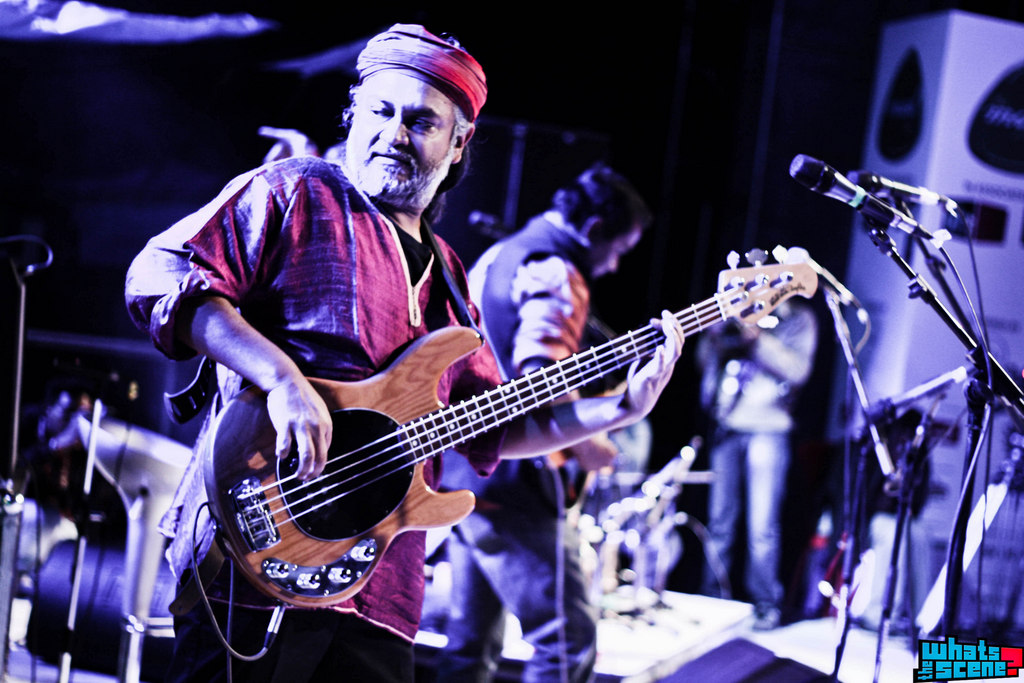
Rudy David aka Rzhude is a Bangalore-based singer-songwriter, studio owner, sound engineer and producer. He is also a founder member of Thermal And A Quarter (TAAQ) with numerous singles, albums and tours to his credit. Currently, he’s a session bass player for Dr. L Subramaniam Global Fusion Group, Lucky Ali, The Raghu Dixit Project among other fusion and rock groups.
WTS: If someone were to give you an unlimited budget, what bass gear would you buy and why?
Rzhude: Well, once the stuff between your ears and your fingers are practiced, then the next point is the instrument. In an unlimited situation, I’d get the NS Design CR Series 4-String Electric Double Bass and the Warwick Infinity Bass Neck-Through 5-String. Sure there are more expensive made to order possibilities but these are off the rack instruments that make the grade quite nicely. SWR Classic Series SM-1500 1500W Bass Amp Head, SWR Goliath Senior IV 6X10 Bass Speaker Cabinet for amplification duties.
Once the signal leaves the guitar, I’d want a really good cable. I’m not so hot on active pickups, but what I really like is passive pick-ups with an active EQ. I’m not into fx processors either but the Eden WTDI World Tour Direct Box and Bass Preamp and the Roland VB-99 V-Bass System could be thrown in for fun.
WTS: What would u prefer – 4/5/6-string?
Rzhude: For me it’s the middle path again, the 5-string completes the range for me. I’m not so much of a high solo-ing kind of a person, I’m a groove-oriented bass player. It’s more like it opens up enough positions using that 5th string itself. For a time, when I started out, probably 12 years back, when I switched from 4 to 5, it took some getting used to. The B string turned out to be a nice place to rest your thumb! Once you get used to it, then you find it pretty handy, although I know that there are some bass players, including a friend of mine who says “If you can’t play it with four, you can’t play it with more”.
WTS: Do you use a signature ‘tone’ for each song or each style of music? How do you get your tones, i.e. tweaking the amp/tweaking the EQ on the bass/using a pedal or all of the above?
Rzhude: If I’m doing session work then it depends on the song. I’d most likely set it up from my Bass pre-amp head and keep it set for the session. If I’m going into a recording situation, with a ‘post effects’ scenario, I go cleaner from the amp and if required, tweak the tone and add fx at the mixing stage. But live its usually just one tone because once I’m set with the sound I like, I don’t fiddle with the amp – I might just move finger position from the bridge to the neck and maybe the mid frequencies. I flip the pick-up mix for soloing and boost the mids a notch with a parametric EQ.
WTS: Do you think a basic knowledge of sound engineering is a requisite when you set up for a gig, or can one get away by going with “what sounds best”?
Rzhude: It’s useful to know these things but I don’t think it’s essential. It will help to know what a sound person has to deal with – that is the most important job at a live gig and high-pressure as it gets. If you’re used to a sound engineer then he knows what you want so you get a good mix of everything coming back to you and it helps to know what’s going on out there and not be unrealistic about your sound demands. I think “what sounds best” is best left to a sound engineer (or two!). Because there’s one doing your front of house mix, which you aren’t going to be able to hear anyway, and there’s one doing your monitor mix which is really crucial to you. My tone I get from the amp and the instrument EQ and the level of the amp should be set according the balance coming off stage and that’s a call for the FOH engineer directly and not as loud as most guitar players want it (you can have more on your monitors!)
WTS: In your opinion, what does it take for a band to make it big in today’s scenario? Also, how do manage to keep things together for a long enough time, like TAAQ?
Rzhude: It means working out your differences and sticking together for what makes sense to you – the music and the right reasons. Keeping a band together is not an easy thing to do – first of all, even getting a band together is not a simple task. There are different definitions of success – I know bands that have been together for 20 years and are quite happy being as they are, not really bothered about who thinks what of their music, or even if anyone is listening to them. They’re probably happy to just meet up now and then and have fun playing their own stuff! If you look at a different context, where it has to make commercial sense to you, then you have to look at what kind of music you plan to play, who your target audience is and how you plan to reach them.
The 11 odd years with TAAQ involved a LOT of practice. What it does give you is chops a-plenty, you have time to work things out with guys who will accommodate you, as opposed to coming in ‘fresh’ to a session, where you have a few hours to work out a set-list. Keeping a band together means working out your personal and musical differences. The joy of being in a band itself is the camaraderie, sharing more than just music with the guys – sharing personal ups and downs. You have to take your songs out in the open in any live format. You have to grow your audience, and the only way to do that is to play, play and play. And once you break through the idea and glamour of ‘being a rockstar’ you realize it isn’t so, and it involves a lot of hard work.
On another note, in today scenario with the kind of recording gear and software we have, it’s much easier to put down your sound and cut a demo than it was, say 10 years ago. A lot of new bands get noticed this way – put up your music and a video on YouTube, if you get a couple of lakh hits, then you get more and more gigs and can command your price for the next gig!
There’s nothing like actually going out and finding that feeling of playing – you are entertaining and more than anything else if you can focus on expressing yourself with this sound and being a part of a group – that’s important and a lot of people forget that. If you are able to get into that zone where you just connect with your instrument and the music and each note at your finger- that is the zone you want to be in, like a meditative state of music. That’s what I look for now, getting into that zone and simply playing the moment.
WTS: How important is sight reading in today’s music scene?
Rzhude: Again, it depends on the kind of music you are playing and the group you are playing it with. For the most part it’s not that important, especially if you are just starting out, you could get away with knowing some theory without knowing how to read or write it. But at some point of time it does come across as the base of music itself, because it is a universal language. For a long time, the only way I could get my music out was by playing the guitar or using a recorder. If you look at any ‘literate’ musician, they don’t need an instrument. When you do that formal education, what it does for you is make you aware of a lot more than just your instrument and you can immediately start writing out different sections on your own.
But over the last few years, using technology like ProTools and Sibelius, I’ve been able to notate much faster – the computer takes that learning curve from you and does a lot of the memory work. I would say it is very important if you are getting serious about your music, if you want to just have fun, then you let the music play you.
WTS: Which artists and bands have had the most significant influence on your playing?
Rzhude: I’d say my single biggest influence, as a singer-songwriter would be James Taylor. Back in the late 80sI was completely floored by his ability to sing and write those songs and amazing production of albums like Never Die Young and Hourglass in the 90s. If I had to list them out, I’d say – James Taylor, The Beatles, Sting and Steely Dan. Today it’s much wider with singers like Abida Parveen and Dhafer Youssuf in the fray on my playlists. As a genre of music, I’m more into acoustic folk. Indian folk music, which is something I grew up listening to, has also had a big influence. As a bass player I haven’t been influenced by anyone in particular.
WTS: Which is your favourite genre for bass playing and why?
Rzhude: I’ve been playing all kinds of music, but now I prefer what you would call ‘fusion’ music. I’ve always had an inclination towards Indian (Carnatic) music which I’ve studied enough to be able to translate some of that learning into my guitar playing and from that onto my bass playing.
‘Fusion’ is such a huge space with so much to do! With this genre of music, if you are lucky you will meet maybe just once before a gig, and most likely you’ll be really working it out on stage. A lot of it is very spontaneous and that is what I like now- because you have no choice but to go into that zone where you really connect with your instrument and the musicians that you are working with. It’s like jazz, in that you have a standard format, but then you count on your musicianship to be able to break that open and make something new out of it.
WTS: Are you a bass player who composes or a composer who plays bass?
Rzhude: The myth to be busted here is that I’m known as a bass player because I’ve been associated with the instrument in a band for many years and although I completely love playing the bass, I see myself as being much broader than a bass player.
So I’d have to say the latter, because I’ve been composing since I was in school, and the way I took up bass was by default – I went to listen to a band in Chennai called Grasshopper Green, where a friend of mine was the bass player, he stopped coming soon after, and his bass was just lying there. So I was asked to play, and had fun playing the instrument, after which these guys said “Hold on to it, keep playing!” So I’d say bass is something I play because of the experience that I’ve had playing it.
My only influence as a bass player would probably be Keith Peters, since he was the bass player in my acoustic band back in 1994!
WTS: The question everyone is asking – why did you break away from TAAQ?
Rzhude: 11 years with one band was about as much as I could take, which was restrictive in the sense that I have a lot more than just one type of music to do. From both the band’s perspective and mine, it made sense – it got to be a lot more serious along the way, and fun is where it stopped for me. Personally I didn’t enjoy playing the pub-scene any more, and those were the main ‘bread and butter’ kind of gigs we were dragging ass around for. Besides, I had also crossed a certain age barrier, where I’d decided on more time for my personal life. It’s been a good thing for me and I know the band will move in a new direction too. I’m still open to session playing with TAAQ – which has happened happily enough on more than one occasion.
WTS: What are the current projects you are working on/involved in?
Rzhude: I’ve been associated more recently with artists like Dr. L Subramaniam and Kavita Krishnamurthy among a host of other great musicians in the Indian Music and Fusion scene. In the last 2 years I’ve played some of the best gigs in my life – touring places like Brazil, Africa and Europe. Besides this, I’ve been active as a producer and engineer – doing a wide variety of albums and demos across different styles and aesthetic. I run my own project studio here in Bangalore with a niche Brand and Sound Identity design service that I’m enjoying. I’m involved in projects that involve Music Education, technology, retail and production – so I’m keeping the mix busy and open to new possibilities.
WTS: What have been the major highlights in your musical career till date?
Rzhude: My first album – produced by Paul Jacob and John Anthony in Chennai 1994 – recorded on 16 track tape. Sharing stage with Deep Purple and Jethro Tull. The last album with TAAQ produced at A.R Rahman’s AM studios with Jeff Peters on the mix – this is as good as it gets anywhere in the world. Also, setting up my own studio and producing music for both TAAQ and other artists since and touring Brazil and Europe.


 Sharath KrishnaswamiSharath Krishnaswami


































![Channel [V] Nokia India Fest Day 1 at Baga, Goa](https://wtsindiamedia.s3.amazonaws.com/sitemedia/2013/05/IMG_1088-150x150.jpg "Channel [V] Nokia India Fest Day 1 at Baga, Goa")
![Channel [V] Nokia India Fest Day 1 at Baga, Goa](https://wtsindiamedia.s3.amazonaws.com/sitemedia/2013/05/IMG_1090-150x150.jpg "Channel [V] Nokia India Fest Day 1 at Baga, Goa")
![Channel [V] Nokia India Fest Day 1 at Baga, Goa](https://wtsindiamedia.s3.amazonaws.com/sitemedia/2013/05/IMG_1091-150x150.jpg "Channel [V] Nokia India Fest Day 1 at Baga, Goa")
![Channel [V] Nokia India Fest Day 1 at Baga, Goa](https://wtsindiamedia.s3.amazonaws.com/sitemedia/2013/05/IMG_1094-150x150.jpg "Channel [V] Nokia India Fest Day 1 at Baga, Goa")
![Channel [V] Nokia India Fest Day 1 at Baga, Goa](https://wtsindiamedia.s3.amazonaws.com/sitemedia/2013/05/IMG_1103-150x150.jpg "Channel [V] Nokia India Fest Day 1 at Baga, Goa")
![Channel [V] Nokia India Fest Day 1 at Baga, Goa](https://wtsindiamedia.s3.amazonaws.com/sitemedia/2013/05/IMG_1117-150x150.jpg "Channel [V] Nokia India Fest Day 1 at Baga, Goa")
![Channel [V] Nokia India Fest Day 1 at Baga, Goa](https://wtsindiamedia.s3.amazonaws.com/sitemedia/2013/05/IMG_1119-150x150.jpg "Channel [V] Nokia India Fest Day 1 at Baga, Goa")
![Channel [V] Nokia India Fest Day 1 at Baga, Goa](https://wtsindiamedia.s3.amazonaws.com/sitemedia/2013/05/IMG_1121-150x150.jpg "Channel [V] Nokia India Fest Day 1 at Baga, Goa")
![Channel [V] Nokia India Fest Day 1 at Baga, Goa](https://wtsindiamedia.s3.amazonaws.com/sitemedia/2013/05/IMG_1158-150x150.jpg "Channel [V] Nokia India Fest Day 1 at Baga, Goa")
![Channel [V] Nokia India Fest Day 1 at Baga, Goa](https://wtsindiamedia.s3.amazonaws.com/sitemedia/2013/05/IMG_1155-150x150.jpg "Channel [V] Nokia India Fest Day 1 at Baga, Goa")
![Channel [V] Nokia India Fest Day 1 at Baga, Goa](https://wtsindiamedia.s3.amazonaws.com/sitemedia/2013/05/IMG_1151-150x150.jpg "Channel [V] Nokia India Fest Day 1 at Baga, Goa")
![Channel [V] Nokia India Fest Day 1 at Baga, Goa](https://wtsindiamedia.s3.amazonaws.com/sitemedia/2013/05/IMG_1143-150x150.jpg "Channel [V] Nokia India Fest Day 1 at Baga, Goa")
![Channel [V] Nokia India Fest Day 1 at Baga, Goa](https://wtsindiamedia.s3.amazonaws.com/sitemedia/2013/05/IMG_1159-150x150.jpg "Channel [V] Nokia India Fest Day 1 at Baga, Goa")
![Channel [V] Nokia India Fest Day 1 at Baga, Goa](https://wtsindiamedia.s3.amazonaws.com/sitemedia/2013/05/IMG_1160-150x150.jpg "Channel [V] Nokia India Fest Day 1 at Baga, Goa")
![Channel [V] Nokia India Fest Day 1 at Baga, Goa](https://wtsindiamedia.s3.amazonaws.com/sitemedia/2013/05/IMG_1161-150x150.jpg "Channel [V] Nokia India Fest Day 1 at Baga, Goa")
![Channel [V] Nokia India Fest Day 1 at Baga, Goa](https://wtsindiamedia.s3.amazonaws.com/sitemedia/2013/05/IMG_1163-150x150.jpg "Channel [V] Nokia India Fest Day 1 at Baga, Goa")
![Channel [V] Nokia India Fest Day 1 at Baga, Goa](https://wtsindiamedia.s3.amazonaws.com/sitemedia/2013/05/IMG_1181-150x150.jpg "Channel [V] Nokia India Fest Day 1 at Baga, Goa")
![Channel [V] Nokia India Fest Day 1 at Baga, Goa](https://wtsindiamedia.s3.amazonaws.com/sitemedia/2013/05/IMG_1178-150x150.jpg "Channel [V] Nokia India Fest Day 1 at Baga, Goa")
![Channel [V] Nokia India Fest Day 1 at Baga, Goa](https://wtsindiamedia.s3.amazonaws.com/sitemedia/2013/05/IMG_1173-150x150.jpg "Channel [V] Nokia India Fest Day 1 at Baga, Goa")
![Channel [V] Nokia India Fest Day 1 at Baga, Goa](https://wtsindiamedia.s3.amazonaws.com/sitemedia/2013/05/IMG_1169-150x150.jpg "Channel [V] Nokia India Fest Day 1 at Baga, Goa")
![Channel [V] Nokia India Fest Day 1 at Baga, Goa](https://wtsindiamedia.s3.amazonaws.com/sitemedia/2013/05/IMG_1197-150x150.jpg "Channel [V] Nokia India Fest Day 1 at Baga, Goa")
![Channel [V] Nokia India Fest Day 1 at Baga, Goa](https://wtsindiamedia.s3.amazonaws.com/sitemedia/2013/05/IMG_1216-150x150.jpg "Channel [V] Nokia India Fest Day 1 at Baga, Goa")
![Channel [V] Nokia India Fest Day 1 at Baga, Goa](https://wtsindiamedia.s3.amazonaws.com/sitemedia/2013/05/IMG_1244-150x150.jpg "Channel [V] Nokia India Fest Day 1 at Baga, Goa")
![Channel [V] Nokia India Fest Day 1 at Baga, Goa](https://wtsindiamedia.s3.amazonaws.com/sitemedia/2013/05/IMG_1253-150x150.jpg "Channel [V] Nokia India Fest Day 1 at Baga, Goa")
![Channel [V] Nokia India Fest Day 1 at Baga, Goa](https://wtsindiamedia.s3.amazonaws.com/sitemedia/2013/05/IMG_1283-150x150.jpg "Channel [V] Nokia India Fest Day 1 at Baga, Goa")
![Channel [V] Nokia India Fest Day 1 at Baga, Goa](https://wtsindiamedia.s3.amazonaws.com/sitemedia/2013/05/IMG_1273-150x150.jpg "Channel [V] Nokia India Fest Day 1 at Baga, Goa")
![Channel [V] Nokia India Fest Day 1 at Baga, Goa](https://wtsindiamedia.s3.amazonaws.com/sitemedia/2013/05/IMG_1262-150x150.jpg "Channel [V] Nokia India Fest Day 1 at Baga, Goa")
![Channel [V] Nokia India Fest Day 1 at Baga, Goa](https://wtsindiamedia.s3.amazonaws.com/sitemedia/2013/05/IMG_1256-150x150.jpg "Channel [V] Nokia India Fest Day 1 at Baga, Goa")
![Channel [V] Nokia India Fest Day 1 at Baga, Goa](https://wtsindiamedia.s3.amazonaws.com/sitemedia/2013/05/IMG_1290-150x150.jpg "Channel [V] Nokia India Fest Day 1 at Baga, Goa")
![Channel [V] Nokia India Fest Day 1 at Baga, Goa](https://wtsindiamedia.s3.amazonaws.com/sitemedia/2013/05/IMG_1294-150x150.jpg "Channel [V] Nokia India Fest Day 1 at Baga, Goa")
![Channel [V] Nokia India Fest Day 1 at Baga, Goa](https://wtsindiamedia.s3.amazonaws.com/sitemedia/2013/05/IMG_1316-150x150.jpg "Channel [V] Nokia India Fest Day 1 at Baga, Goa")
![Channel [V] Nokia India Fest Day 1 at Baga, Goa](https://wtsindiamedia.s3.amazonaws.com/sitemedia/2013/05/IMG_1325-150x150.jpg "Channel [V] Nokia India Fest Day 1 at Baga, Goa")
![Channel [V] Nokia India Fest Day 1 at Baga, Goa](https://wtsindiamedia.s3.amazonaws.com/sitemedia/2013/05/IMG_1339-150x150.jpg "Channel [V] Nokia India Fest Day 1 at Baga, Goa")
![Channel [V] Nokia India Fest Day 1 at Baga, Goa](https://wtsindiamedia.s3.amazonaws.com/sitemedia/2013/05/IMG_1345-150x150.jpg "Channel [V] Nokia India Fest Day 1 at Baga, Goa")
![Channel [V] Nokia India Fest Day 1 at Baga, Goa](https://wtsindiamedia.s3.amazonaws.com/sitemedia/2013/05/IMG_1361-150x150.jpg "Channel [V] Nokia India Fest Day 1 at Baga, Goa")
![Channel [V] Nokia India Fest Day 1 at Baga, Goa](https://wtsindiamedia.s3.amazonaws.com/sitemedia/2013/05/IMG_1365-150x150.jpg "Channel [V] Nokia India Fest Day 1 at Baga, Goa")
![Channel [V] Nokia India Fest Day 1 at Baga, Goa](https://wtsindiamedia.s3.amazonaws.com/sitemedia/2013/05/IMG_1367-150x150.jpg "Channel [V] Nokia India Fest Day 1 at Baga, Goa")
![Channel [V] Nokia India Fest Day 1 at Baga, Goa](https://wtsindiamedia.s3.amazonaws.com/sitemedia/2013/05/IMG_1373-150x150.jpg "Channel [V] Nokia India Fest Day 1 at Baga, Goa")
![Channel [V] Nokia India Fest Day 1 at Baga, Goa](https://wtsindiamedia.s3.amazonaws.com/sitemedia/2013/05/IMG_1377-150x150.jpg "Channel [V] Nokia India Fest Day 1 at Baga, Goa")
![Channel [V] Nokia India Fest Day 1 at Baga, Goa](https://wtsindiamedia.s3.amazonaws.com/sitemedia/2013/05/IMG_1380-150x150.jpg "Channel [V] Nokia India Fest Day 1 at Baga, Goa")
![Channel [V] Nokia India Fest Day 1 at Baga, Goa](https://wtsindiamedia.s3.amazonaws.com/sitemedia/2013/05/IMG_1411-150x150.jpg "Channel [V] Nokia India Fest Day 1 at Baga, Goa")
![Channel [V] Nokia India Fest Day 1 at Baga, Goa](https://wtsindiamedia.s3.amazonaws.com/sitemedia/2013/05/IMG_1406-150x150.jpg "Channel [V] Nokia India Fest Day 1 at Baga, Goa")
![Channel [V] Nokia India Fest Day 1 at Baga, Goa](https://wtsindiamedia.s3.amazonaws.com/sitemedia/2013/05/IMG_1401-150x150.jpg "Channel [V] Nokia India Fest Day 1 at Baga, Goa")
![Channel [V] Nokia India Fest Day 1 at Baga, Goa](https://wtsindiamedia.s3.amazonaws.com/sitemedia/2013/05/IMG_1393-150x150.jpg "Channel [V] Nokia India Fest Day 1 at Baga, Goa")
![Channel [V] Nokia India Fest Day 1 at Baga, Goa](https://wtsindiamedia.s3.amazonaws.com/sitemedia/2013/05/IMG_1412-150x150.jpg "Channel [V] Nokia India Fest Day 1 at Baga, Goa")
![Channel [V] Nokia India Fest Day 1 at Baga, Goa](https://wtsindiamedia.s3.amazonaws.com/sitemedia/2013/05/IMG_1414-150x150.jpg "Channel [V] Nokia India Fest Day 1 at Baga, Goa")
![Channel [V] Nokia India Fest Day 1 at Baga, Goa](https://wtsindiamedia.s3.amazonaws.com/sitemedia/2013/05/IMG_1428-150x150.jpg "Channel [V] Nokia India Fest Day 1 at Baga, Goa")
![Channel [V] Nokia India Fest Day 1 at Baga, Goa](https://wtsindiamedia.s3.amazonaws.com/sitemedia/2013/05/IMG_1434-150x150.jpg "Channel [V] Nokia India Fest Day 1 at Baga, Goa")
![Channel [V] Nokia India Fest Day 1 at Baga, Goa](https://wtsindiamedia.s3.amazonaws.com/sitemedia/2013/05/IMG_1477-150x150.jpg "Channel [V] Nokia India Fest Day 1 at Baga, Goa")
![Channel [V] Nokia India Fest Day 1 at Baga, Goa](https://wtsindiamedia.s3.amazonaws.com/sitemedia/2013/05/IMG_1467-150x150.jpg "Channel [V] Nokia India Fest Day 1 at Baga, Goa")
![Channel [V] Nokia India Fest Day 1 at Baga, Goa](https://wtsindiamedia.s3.amazonaws.com/sitemedia/2013/05/IMG_1455-150x150.jpg "Channel [V] Nokia India Fest Day 1 at Baga, Goa")
![Channel [V] Nokia India Fest Day 1 at Baga, Goa](https://wtsindiamedia.s3.amazonaws.com/sitemedia/2013/05/IMG_1445-150x150.jpg "Channel [V] Nokia India Fest Day 1 at Baga, Goa")
![Channel [V] Nokia India Fest Day 1 at Baga, Goa](https://wtsindiamedia.s3.amazonaws.com/sitemedia/2013/05/IMG_1482-150x150.jpg "Channel [V] Nokia India Fest Day 1 at Baga, Goa")
![Channel [V] Nokia India Fest Day 1 at Baga, Goa](https://wtsindiamedia.s3.amazonaws.com/sitemedia/2013/05/IMG_1486-150x150.jpg "Channel [V] Nokia India Fest Day 1 at Baga, Goa")
![Channel [V] Nokia India Fest Day 1 at Baga, Goa](https://wtsindiamedia.s3.amazonaws.com/sitemedia/2013/05/IMG_1500-150x150.jpg "Channel [V] Nokia India Fest Day 1 at Baga, Goa")
![Channel [V] Nokia India Fest Day 1 at Baga, Goa](https://wtsindiamedia.s3.amazonaws.com/sitemedia/2013/05/IMG_1495-150x150.jpg "Channel [V] Nokia India Fest Day 1 at Baga, Goa")
![Channel [V] Nokia India Fest Day 1 at Baga, Goa](https://wtsindiamedia.s3.amazonaws.com/sitemedia/2013/05/IMG_1504-150x150.jpg "Channel [V] Nokia India Fest Day 1 at Baga, Goa")
![Channel [V] Nokia India Fest Day 1 at Baga, Goa](https://wtsindiamedia.s3.amazonaws.com/sitemedia/2013/05/IMG_1518-150x150.jpg "Channel [V] Nokia India Fest Day 1 at Baga, Goa")
![Channel [V] Nokia India Fest Day 1 at Baga, Goa](https://wtsindiamedia.s3.amazonaws.com/sitemedia/2013/05/IMG_1520-150x150.jpg "Channel [V] Nokia India Fest Day 1 at Baga, Goa")
![Channel [V] Nokia India Fest Day 1 at Baga, Goa](https://wtsindiamedia.s3.amazonaws.com/sitemedia/2013/05/IMG_1622-150x150.jpg "Channel [V] Nokia India Fest Day 1 at Baga, Goa")
![Channel [V] Nokia India Fest Day 1 at Baga, Goa](https://wtsindiamedia.s3.amazonaws.com/sitemedia/2013/05/IMG_1611-150x150.jpg "Channel [V] Nokia India Fest Day 1 at Baga, Goa")
![Channel [V] Nokia India Fest Day 1 at Baga, Goa](https://wtsindiamedia.s3.amazonaws.com/sitemedia/2013/05/IMG_1620-150x150.jpg "Channel [V] Nokia India Fest Day 1 at Baga, Goa")
![Channel [V] Nokia India Fest Day 1 at Baga, Goa](https://wtsindiamedia.s3.amazonaws.com/sitemedia/2013/05/IMG_1630-150x150.jpg "Channel [V] Nokia India Fest Day 1 at Baga, Goa")
![Channel [V] Nokia India Fest Day 1 at Baga, Goa](https://wtsindiamedia.s3.amazonaws.com/sitemedia/2012/10/IMG_2287-150x150.jpg "Channel [V] Nokia India Fest Day 1 at Baga, Goa")
![Channel [V] Nokia India Fest Day 1 at Baga, Goa](https://wtsindiamedia.s3.amazonaws.com/sitemedia/2013/05/IMG_1627-150x150.jpg "Channel [V] Nokia India Fest Day 1 at Baga, Goa")
![Channel [V] Nokia India Fest Day 1 at Baga, Goa](https://wtsindiamedia.s3.amazonaws.com/sitemedia/2013/05/IMG_1576-150x150.jpg "Channel [V] Nokia India Fest Day 1 at Baga, Goa")
![Channel [V] Nokia India Fest Day 1 at Baga, Goa](https://wtsindiamedia.s3.amazonaws.com/sitemedia/2013/05/IMG_1573-150x150.jpg "Channel [V] Nokia India Fest Day 1 at Baga, Goa")
![Channel [V] Nokia India Fest Day 1 at Baga, Goa](https://wtsindiamedia.s3.amazonaws.com/sitemedia/2013/05/IMG_1554-150x150.jpg "Channel [V] Nokia India Fest Day 1 at Baga, Goa")
![Channel [V] Nokia India Fest Day 1 at Baga, Goa](https://wtsindiamedia.s3.amazonaws.com/sitemedia/2013/05/IMG_1532-150x150.jpg "Channel [V] Nokia India Fest Day 1 at Baga, Goa")
![Channel [V] Nokia India Fest Day 1 at Baga, Goa](https://wtsindiamedia.s3.amazonaws.com/sitemedia/2013/05/IMG_1488-150x150.jpg "Channel [V] Nokia India Fest Day 1 at Baga, Goa")
![Channel [V] Nokia India Fest Day 1 at Baga, Goa](https://wtsindiamedia.s3.amazonaws.com/sitemedia/2012/10/IMG_1680-150x150.jpg "Channel [V] Nokia India Fest Day 1 at Baga, Goa")
![Channel [V] Nokia India Fest Day 1 at Baga, Goa](https://wtsindiamedia.s3.amazonaws.com/sitemedia/2012/10/IMG_1630-150x150.jpg "Channel [V] Nokia India Fest Day 1 at Baga, Goa")
![Channel [V] Nokia India Fest Day 1 at Baga, Goa](https://wtsindiamedia.s3.amazonaws.com/sitemedia/2012/10/IMG_1636-150x150.jpg "Channel [V] Nokia India Fest Day 1 at Baga, Goa")
![Channel [V] Nokia India Fest Day 1 at Baga, Goa](https://wtsindiamedia.s3.amazonaws.com/sitemedia/2012/10/IMG_1644-150x150.jpg "Channel [V] Nokia India Fest Day 1 at Baga, Goa")
![Channel [V] Nokia India Fest Day 1 at Baga, Goa](https://wtsindiamedia.s3.amazonaws.com/sitemedia/2012/10/IMG_1653-150x150.jpg "Channel [V] Nokia India Fest Day 1 at Baga, Goa")
![Channel [V] Nokia India Fest Day 1 at Baga, Goa](https://wtsindiamedia.s3.amazonaws.com/sitemedia/2012/10/IMG_1658-150x150.jpg "Channel [V] Nokia India Fest Day 1 at Baga, Goa")
![Channel [V] Nokia India Fest Day 1 at Baga, Goa](https://wtsindiamedia.s3.amazonaws.com/sitemedia/2012/10/IMG_1661-150x150.jpg "Channel [V] Nokia India Fest Day 1 at Baga, Goa")
![Channel [V] Nokia India Fest Day 1 at Baga, Goa](https://wtsindiamedia.s3.amazonaws.com/sitemedia/2012/10/IMG_1668-150x150.jpg "Channel [V] Nokia India Fest Day 1 at Baga, Goa")
![Channel [V] Nokia India Fest Day 1 at Baga, Goa](https://wtsindiamedia.s3.amazonaws.com/sitemedia/2012/10/IMG_1670-150x150.jpg "Channel [V] Nokia India Fest Day 1 at Baga, Goa")
![Channel [V] Nokia India Fest Day 1 at Baga, Goa](https://wtsindiamedia.s3.amazonaws.com/sitemedia/2012/10/IMG_1673-150x150.jpg "Channel [V] Nokia India Fest Day 1 at Baga, Goa")